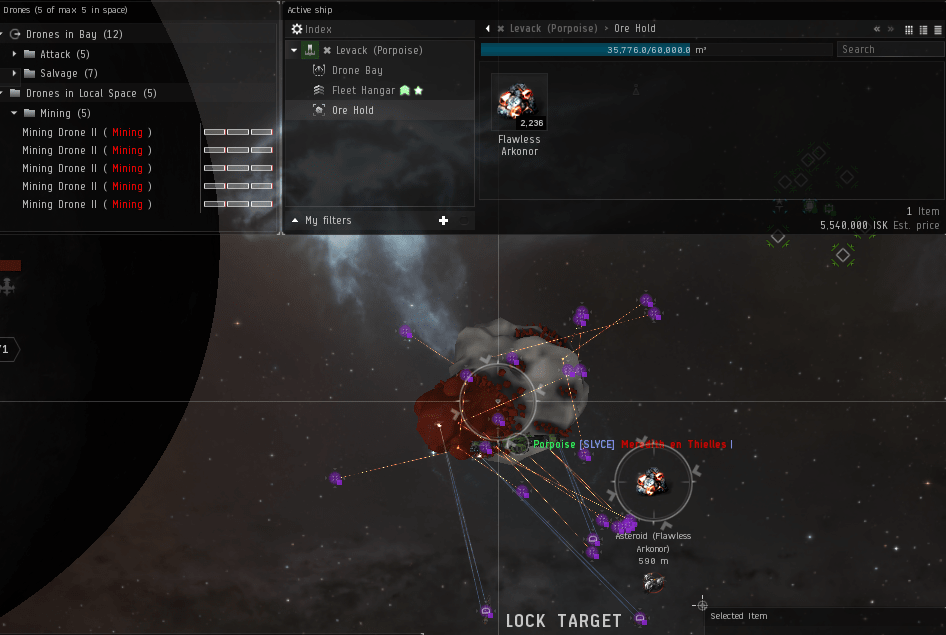
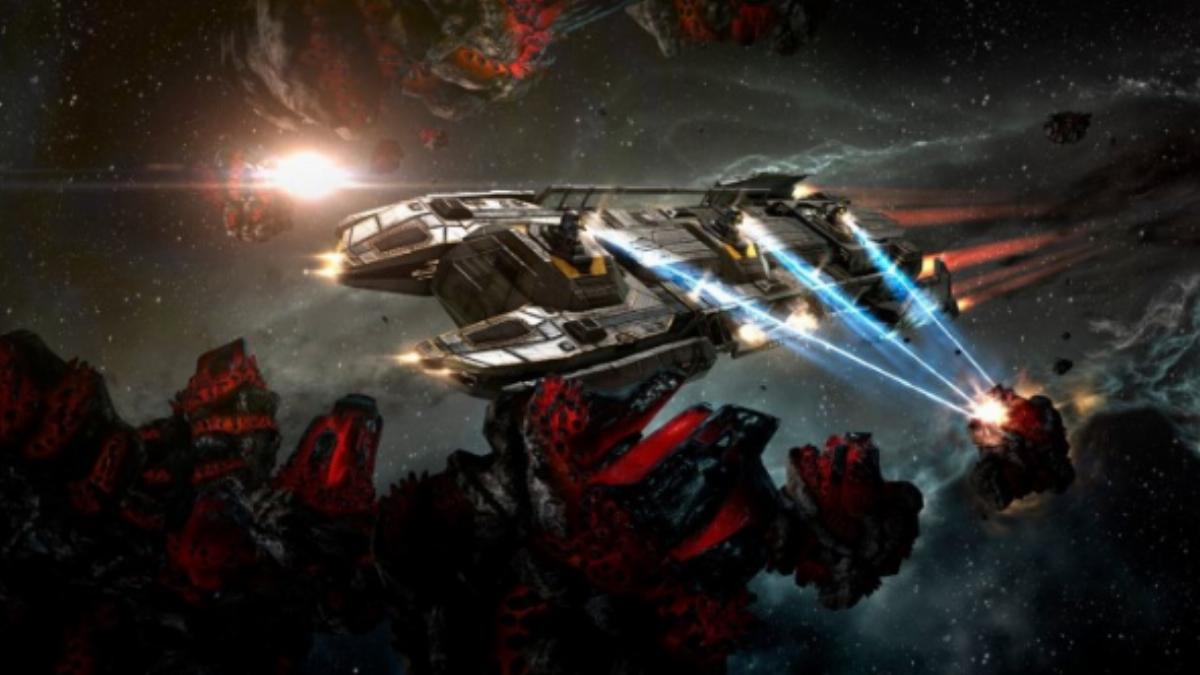
Featured

Meredith en Thielles for CSM 15

Good evening ladies and gents of EVE Online. This is one of the very few “out of character” posts I will write on this blog. As you can see by the title of this post, I am running for for the 15th EVE Online CSM in 2020, and I need your support to do it.

Why should you vote for me?

I may not be the greatest PVPer. Heck, I only PVP when I’m in a fleet and I’m terrible at it, to be honest. I perhaps should have been a pacifist, but I live in null sec and that makes that idea rather impossible. However, as is noted on my killboard, I tend to prefer to stick with role playing, writing equally terrible fan fiction as Meredith en Thielles, and nit picking the lore and trying to just be helpful to others.

But what I am is a listening ear and communicator – and a researcher.

In real life, I am a freelance writer. I make my living researching, double checking leads, and communicating with intent to publish and further communicate to the public.

Who better to be on CSM who can bring that experience and those skills to the table?

If that is not enough to convince you, then consider my platform.

The lore. As you can see from this blog, I have an addiction and that happens to be the storyline and background of EVE Online. I love the lore, and digging into missions for more story. If I can’t find the story, I create it. I can’t get enough of it and own a good number of the books as well.

Finding space rocks. Anyone reading this blog can see that. I mean, I identify as the space astrogeologist.

Being the best diplo I can humanly be for both my alliance and the community at large when they ask me, “What is EVE Online?” while maintaining an alliance radio station targeted at fellow alliance and coalition members.

Outside of the game, I work in the financial industry by day, and I write books (published four times) and paint (my artwork has been displayed in a few galleries across North Ontario) in my spare time.

My community involvement includes:

  • Donating my art to the EVE meets (starting with EVE North – that hand painted framed picture of a planet? That was my work.) to raise money for charity.
  • Volunteering at the meets and conventions. I’m more of a hands on “it’s more fun as a volunteer” than sitting on the sidelines type. Someone asks for help, and I’m there.
  • Working as a diplo for my alliance, SLYCE, as a point of contact for corp recruitment and helping new players and old alike get used to null sec if they haven’t been out there before.
  • Maintaining an in-character blog (this one!) on surviving EVE while doing it all in character.

What I stand for:

  • Anti-bullying. In game, this is a complex issue. Outside of the game, it’s far more simple. We are all blue to each other. Act like it.
  • Anti-botting.
  • Helping others get into the game, whether as a brand new player or a returning one a little lost on the UI changes.
  • Anything to do with industry.
  • The meets and more ways for us to just be blue to each other outside of game.

I am, of course, at the end of an EVE mail in game, or even open a chat with me. I’m here to listen. I can also be found on social media. All you need to do is just reach out.

My corp likes to call me the Space Mom or “She Who Spends Way Too Much Time Underneath Asteroids”.

Remember, a vote for me is a vote for someone who listens.

Lecture and Q&A on Ice Harvesting

Professor en Thielles’ dual Intaki/Deteis heritage allowed her passage to where most Gallente would not be welcomed, and one of those places was straight into the Caldari State. 

As a Gallente myself, I am often surprised at the distinct blase nature of Professor en Thielles where it regarded the Caldari.  It often felt like she cared little for the war between Gallente and Caldari, and often flaunted the fact that she saw herself as an ‘outsider’.  It is unclear if she still continues to feel this way, but considering that she is now in [redacted] rather than in either Gallente Federation or Caldari State space, I feel that it does make it quite clear that she chooses to not pick a side in the Faction War between the two, instead often choosing to fight for the Minmatar and for their quest to bring their remaining numbers home from Amarr. 

However, I digress. 

In this case, it is clear that she is still very friendly with the Caldari State. 

As someone who has studied my quarry, while we continue to watch for any signs of treason to the Federation, it appears that Ms. en Thielles remains at least relatively loyal or, perhaps more accurate, discreet in maintaining confidentiality as a professional.  She was trusted in many cases to keep certain things confidential, and, even after all these years, still does… not out of loyalty, but out of a certain degree of professionalism.

Ophollise Eura – Gallente Federal Intelligence Office – Report sent mid-YC90

YC 120
(2.06.YC120)
Itamo VI – Moon 6 Station- Caldari State Science and Trade Institute School

Good evening ladies and gentlemen of the Caldari State ruling party, faculty, students, and guests of the Science and Trade Institute School and those of you who are here for a good meal and the free wine.

(*background chuckles and laughter*)

My name is Professor Meredith en Thielles of the Astrogeology and Geophysics Department at Caille University.  I want to thank you for inviting me to address you tonight and talk about a subject we are all curious about – that of the harvesting of ice in the depths of New Eden and even, occasionally, into wormhole space.  Ice harvesting, also colloquially known as ice mining, is a vital part of resource harvesting.  Without ice, we don’t have the strontium and isotopes needed to run what we need to keep running in order to maintain our current standard of living.

Without ice, we wouldn’t have our gates.

That being said, I will move onto where we find the ice.

Ice is only found as a type of cosmic anomaly, which means you can’t find an ice “anom” without a scanner.  While probes aren’t necessary, it does lead to an interesting question of where these anomalies come from and what makes them.  There are a few theories kicking around, but the prevailing theory is that our ice anomalies are the result of comets that have broken apart and become belts of asteroids formed of frozen ice.  However, make no mistake, the ice in these anomalies is not the kind you put into your drinking glass as much of is either toxic, radioactive… or both… being mostly comprised of Heavy Water, Liquid Ozone, and Strontium Clathrates and not your garden variety of H2O.

Some varieties of ice, dependent on where it is found – for reasons we have not yet managed to even fathom a theory yet – also yields various isotopes, such as Helium Isotope (Amarr), Nitrogen Isotope (Caldari), Oxygen Isotope (Gallente), or Hydrogen Isotope (Minmatar).

(*Someone must have raised a hand from the crowd here, because Professor en Thielles acknowledges it*)

Do I have a question?

(*from the crowd, it sounds muffled*) What do these isotopes and other products do?

I’m glad you asked that, although we’re getting a bit a head of ourselves here, but since it was asked…

Each of the various types of isotope is used to fuel jump drives, dependent on the ship’s originating faction, or fuel in “Points of Safety”… which, again, is also dependent on the faction.  It would be quite useless to attempt to fuel a Minmatar jump drive with Nitrogen Isotopes, and vice versa.  Same with the Points of Safety – if the POS is of Caldari manufacture, then using any other type of isotope other than Nitrogen is a useless venture.

As to the other elements…

Heavy water is used for fueling starbases, although these structures are slowly becoming old and parts are hard to find, resulting in a slow demise of them in favour of the Upwell structures, such as the Fortizar, Athanor… and similar.  I am not sure if Heavy Water is used with these newer structures, and, as always, if anyone still has questions regarding these – keep in mind I’m not a starbase builder.  I am just familiar with what can be used to fuel and build them and how to find it, as well as the chemistry behind such things.  However, if anyone has any questions I can do my best to ask colleagues who are more familiar with it and will answer any mail sent to me to the best of my limited ability.

Liquid Ozone, however, is something all of us have used at one time or another.  It is the much demanded fuel for cynosural beacons, jump bridges, and to some extend… our stargates.  It is easily the most important fuel and product being traded in New Eden.  Without out, our way of life… as we know it… would simply cease.

Strontium Clathrates are useful, and used as a fuel for large scale boosting in fleets, whether those are mining fleets or fleets for war.

I believe that answers your question?  Yes?  Good, let’s move on.

Now, I believe I was talking about the various types of ice, and where they are found.  Now, while our little side jaunt was useful in stating why ice is important, we do need to talk about what kind of ice yeilds what, and where it can be found.

There are four types of ice found in what we call “standard” ice belts – Glare Crust, Dark Glitter, Gellidus, and Krystallos.  These four ice types all yeild Heavy Water, Liquid Ozone, and Strontium Clathrates.

Yes, all of them do.  How much of each depends on which type of ice.  If you need Heavy Water, the best ice to harvest and refine is Glare Crust.  If you need Liquid Ozone, the best type of ice to harvest is Dark Glitter.  If you’re hunting for Strontium, then you need Krystallos.  Gellidus yeilds a decent amount of all three at once, but not as much of each type of element as the other three.

Standard ice belts are found only in low-sec and null-sec, and with that being said I think we understand why harvesting ice can be rather lucrative.  Some say that ice isn’t as lucrative as rock type ore harvesting, but I personally disagree and think it can be far more lucrative if you harvest it in an area with suitable defenses.

However, that being said there are ice belts in high sec but these are isotope types of ice, and – logically – what type of isotope you find depends on what faction’s space you’re in.

Now, you can find isotope ice in low and null-sec, and these belts will be of better quality of high sec ice.  The isotope ice are as follows; Minmatar will be Glacial Mass, Gallente will be Blue Ice, Caldari will be White Glaze, and Amarr will be Clear Icicle.

The isotope ice has also been known to yeild some, but not much, Heavy Water, Liquid Ozone, and even Strontium Clathrates, but not in usual amounts.  Just trace amounts that could add up, after awhile, of something useful but it would be better to mine the standard ice types for those.

Now, ice harvesting requires a better ship than a run of the mill venture.  Mining ice is the realm of more experienced miners as the ships are more advanced and require larger holds.  A single unit of ice is 1000m3, so mining it in a venture would be a useless affair as the hold would fill too quickly and there isn’t enough power in the plant to keep the lasers going anyway.

The closest thing to a venture is the Endurance, which recieves significant bonuses and has a larger ore hold to allow for ice mining.  The prospect isn’t bad either, and has the added bonus of being able to cloak and warp away at the first hint of danger — yes, while an Endurance also can cloak it takes up space the Endurance just doesn’t have.

If you are looking to use a barge, then a procurer is decent, and a skiff even better as both can take a few hits from hostiles and keep carving up chunks of ice to take back home.

Now you can ask your questions and I will do my best to answer them.

What is your personal preference for mining ice?

My personal preference changes depending on the relatively hostility of the space around me, and whether there are hostiles roaming about in my corner of space.  That means I typically fly a prospect, and while that does cut into the bonuses that I would get from an endurance it does mean I have two lasers drilling ice and the ability to cloak and warp off if I need to.  I also still have the hold space to get a decent amount of ice while I’m out there.  If I’m out as part of a fleet or with company watching my back, then I generally prefer my skiff.

Do Upwell Structures use Heavy Water like POS do?

I have no idea.  I’m not the best person to ask.  As I said, I am good at finding it, drilling it, and keeping my ship in one piece long enough to find customers to buy it.  I can, however, look into it and if you send me an EVE Mail or comment here, I’ll even remember to get back to you on it.
ABC Ores 5 – Surviving Null-Sec as a Miner

The Amarr pray for God
The Caldari pray for money
The Gallente pray for peace
The Minmatar just pray that their ship holds together…

Found on an EVE player’s bio

Good morning class, and thank you for listening to another one of my lectures on Null-Sec Rock Mining.  This is the last lecture, so after today I will be going back to the Bourynes Campus of Caille University, but I will still be available by mailer to answer any questions, so please take note of my name (“Meredith en Thielles”) and, if you have questions after today, please feel free to reach out and I’ll do my best to answer.

Now, null-sec mining — as I’ve touched on before — has its own unique set of dangers.  In many ways it is similar to mining in both high-sec and low-sec but at the same time it isn’t.

The first thing to note is that mining in null isn’t usually done at the marked places like it is in high-sec.  You don’t just head straight for the first asteroid belt or you’ll find that you’re finding the usual Veldspar, Plagioclase, and Scordite instead of the higher value ABC’s.  It also depends on what section of null-sec you’re in.  For reasons we haven’t quite managed to figure out yet, what pops up in an anomaly in one section doesn’t always appear (or appear at all) in another.

So, the first rule is that you need to check your probe scanner (not the d-scanner, but keep that screen handy too!) to bring up what anoms are available in your star system… and try not to be too disappointed if you don’t find one.  They do drift in, and out, of a system with great frequency.  In most cases, there is a standing agreement between corps and system governors on who can mine where, so check with your corp first if you’re not sure but you can sometimes hop over a system or two to harvest what is in that system.

One exception of note — if you are lucky enough to be in a corp that has existing mine fracking operations, there is a chance that you will be able to hop out of station and not have to go any further than a few hundred kilometers off the station to mine what we affectionately call “moon goo”, although it’s not even remotely close to being a goo at all as it’s still a rock. 

I have no idea why they call it goo, so don’t even ask.

The same principles apply with the ABC’s, but the final product is metals and elements very rarely found anywhere else (if at all).

So, now you have how to find what you’re mining, and you already know about the value and what it’s generally used for, but what about watching your back?

Being in null-sec, chances are you have joined a corp that is part of a much larger alliance… perhaps even a coalition.  They will have set up a broadcast channel that acts a bit like a neighbourhood watch. If a hostile, or numerous hostiles, are spotted their movement is reported as well as fleet make-up and if they like to cyno others in a maneuver affectionately nicknamed “The Hot Drop” as hotdroppers.  There is also software you can install called “N.E.A.R.2”, but usually a sharp eye on both your intel channel and an ear in your Standing Fleet will alert you to hostiles quickly enough for you to get someplace safe and out of reach.  Using all three makes you a miner that is hard to catch indeed.

The third rule is to fly a ship that can handle hostiles if they happen to catch you, whether those are pirates or hostile capsuleers of other alliances, and hold against an onslaught but is still quick enough to escape once you have that opening.  The favourite of miners everywhere is the entry level procurer, or the more advanced (and tougher) skiff.  Your corp and alliance will have tips on what outfitting you will need to survive… listen to them and fit your ship accordingly.  What fit works best depends on what section of null you’re in and what the prevailing pirate (affectionately… or not so affectionately… nicknamed “rats”) is.

This is just a brief lecture on that.  There are numerous other things to keep in mind, but for someone new to null-sec, and mining in null, this should keep you alive and the ISK rolling in steadily.

ABC Ores 4 – Spodumain

Were it not for the fact that I have basically been told I can’t go home, I would find the whole controversy amusing. DED and CONCORD may not take my work for it – nor the word of my colleagues – but I am Meredith en Thielles. I could give you the encyclopaedic-like entry of where I was born, when, and even who all my family members are. Where I went to school, my grades, and even every employer.

But CONCORD has that. Me knowing it would prove nothing. It would only prove I can read and hack a computer which would be simple for a Drifter.

What they don’t get is exactly what my friends do – why they know it’s me. It’s what I can’t copy and what makes me… well… me. It’s that sense of Self they don’t understand in me having that makes me know I am myself without any shadow of a doubt.

Their loss is Solyaris Chtonium’s gain.

Professor Meredith en Thielles, Astrogeologist – Lippstadt Creed/SLYCE

Algonquin Secondary and Vocational School
Mirilene System (Gallente Federation Navy Space Station)

I can see by the looks on some of your faces that you fully expected this series of lectures to have ended yesterday.  After all, I talked about Arkonor, Bistot, and Crokite – the ABC’s – of nullsec ore.  What else could I possibly add?  Actually, I could add quite a bit.  That would include how to mine it and what you need to be aware of, and tomorrow we will indeed talk about that.  On this fourth day, I have one more ore to tell you about that you will find in null-sec.

Spodumain

Spodumain is another rock type ore found in nullsec of a similar density of the previous three, and like those three previous I mentioned it also only requires a normal mining laser to mine.  Like the other three ores in the previous lectures, Spodumain is a very valuable and useful ore used in numerous things.  Spodumain is another gem yeilding ore, but the gems and crystals found within it are the more common ones however, in spodumain those gems and crystals are found in far greater quantities and are far purer in form than in any other ore.  Those gems and minerals are: Tritanium, Pyerite, Mexallon, and Isogen.  While these four elements are common, their amounts and density within the “spod” makes the ore extremely valuable and useful.  Tritanium and Mexallon are metals, while Pyerite and Isogen are crystals and/or gems.

Rarity

Spodumain is only found in nullsec.  Period.  What also makes it a bit more rare is that it’s also only found in two sections of nullsec and those are close to the Amarr Empire and close to the Caldari State, both of which harbour both dangerous pirates and factions of independent capsuleers who have formed into alliances and powerful coalitions in their bid to carve out their own sovreign space.

What is Spodumain Used For?

Numerous things.  Because it yeilds not one, but four different minerals, two of which are the first of the metals in this series of lectures, and two different crystalline structures, its value is quite high.

Tritanium

Tritanium is used for everything, despite its physical volitility and probably because of its common availability.  It’s literally everywhere and almost everything yeilds it making it one of the most common metals in New Eden.

Mexallon

The second metal found in Spodumain, it is a very malleable and common mineral of a silvery green colour.  When combined with tritanium, it creates alloys that are difficult to break through (making it useful in ship construction) but can also be used by itself.

Pyerite

Pyerite is a common, but disctinctive fiery orange gem used in a few different ways such as creating electrical conduits, lasers, in bio-chemical applications… and even as jewellry if cut to enhance its natural glow.

Isogen

Another gem found in select places, but in those places found in great quantities.  Hard, tough, and seemingly impossible to cut except by another Isogen crystal with a sparkle of light blue within a white crystal.  Ship builders use it in electronic and weapon manufacturing, particularly in cutting other things or focusing lasers, but the rich love it for the sparkle when cut for jewellry to yeild a white stone that sparkles with blue and faint blue.  For ages, perhaps even before the EVE Gate, the stone was featured prominently as the stone of choice when a lover desired to take a spouse as the focal point in “bending the knee” to the prospective spouse.  A popular saying from a popular jewellry maker in Intaki space was that “Isogen is a girl’s best friend” for thousands of years.

Theories on the Origin of Spodumain

Spodumain is likely formed in much the same way as Arkonor and Bistot.  Like the others, to figure out its origin, which helps in finding new deposits, we need to look at what comes out of it.

References
http://eve.wikia.com/wiki/Isogen
http://eve.wikia.com/wiki/Mexallon
http://games.chruker.dk/eve_online/item.php?type_id=35
http://eve.wikia.com/wiki/Tritanium
http://games.chruker.dk/eve_online/item.php?type_id=19
http://eve.wikia.com/wiki/Spodumain
https://wiki.eveuniversity.org/Asteroids_and_Ore

ABC Ores 3 – Crokite

So what if she’s really a Sleeper or a Drifter? Thus far she hasn’t given anyone any indication of hostile intent. If anything, she hasn’t even given us any indication that she isn’t who she says she is.

DED’s response is knee-jerk and overly harsh.

Even if she is a Sleeper agent, the only thing she’s done is come bearing an olive branch and what have we done in return? Chased her back out to null! If she turns hostile and comes with more Drifters in response, whose fault is that? Certainly not hers.

Potillot Mumnier, Exploration Agent – Caille University, Trossere

Crokite.

I have already talked about arkonor and bistot over the past few days.  Today I am going to talk about a third rock type ore found only in null-sec, and that is an ore you’ve probably already at least heard about – Crokite.  Crokite is another crystalline ore, but unlike Bistot isn’t formed by geodes but instead by great pressures.  If we were to find it in the ground, it would have veins to mine deep underground.  However, because we keep finding these nullsec ores in asteroid belts and anomolies, we had nothing to compare in that way.  What makes Crokite so valuable is it is, bar none, the best resource to mine if you need Nocxium.

What is Crokite?

As I touched on a few moments ago, Crokite is a type of crystal bearing ore that provides gems.  It is extremely dense, and requires refining to store as compressed ore (a process of knocking off the biggest chunks of rock slag) and then further refining in order to extract the gem itself.  It has a similar density to Arkonor and Bistot, but doesn’t require the same specialized lasers or drones as Mercoxit.  Crokite is also valued for its use as a decorative stone, and many of us wear bits and pieces of it as jewelry.  In manufacturing, the gems are further broken down into their atomic level to yeild various minerals. It appears golden as an ore because it is a type of Beryl stone containing Nocxium, and trace amounts of Zydrine and Tritanium.

Rarity

Crokite itself isn’t as rare as Arkonor (or even Mercoxit) but because it is only found in nullsec, and then only certain conditions, it’s very difficult to drag a miner out of a belt once they find a good sized deposit of ore.

Risks Inherent in Harvesting Crokite

Needless to say, given that the ore is only found in nullsec or wormholes, the risks are the same as both Arkonor and Bistot.

What is Crokite Used For?

Crokite yeilds the mineral Nocxium, which is critical in building capsules… which is critical for capsuleers to be exactly what they are.  While it also contains trace amounts of Zydrine and Tritanium, the fact that the mineral Nocxium is found in far greater quantities in Crokite than in any other ore drives the value — the whole reason miners are willing to risk their lives in its harvest — up almost as high as the value of Arkonor.

Theories on the Origin of Crokite

This is where things get interesting.  While, yes, the other ores somewhat originate the same as Crokite, Crokite also has the interesting property of holding that vast amount of Nocxium I mentioned before.  What makes that interesting, and different, is in how Nocxium is formed.  This serves as a vital clue.

Nocxium is only formed during supernovas and by the great pressures, heat, and frisson from those supernovas.  Not only is the mineral volitile, much like mercoxit, once refined from the surrounding minerals and crystals, this makes it rare.  But the rarity isn’t the clue.  The clue leads us to believe that, and keep in mind this is only a theory, that unlike the other ores which could come from comets or asteroid belts but that Crokite ‘hitched’ a ride with those comets.  In reality, crokite is the remains of the core of a long dead volcanic planet blown apart by a sun going supernova… the space dust left in its wake.

References:
http://eve.wikia.com/wiki/Nocxium
http://games.chruker.dk/eve_online/item.php?type_id=1225
http://eve.wikia.com/wiki/Crokite
https://wiki.eveuniversity.org/Asteroids_and_Ore
https://en.wikipedia.org/wiki/Beryl
https://en.wikipedia.org/wiki/Geode
https://www.nationalgeographic.com/science/earth/inside-the-earth/minerals-gems/

ABC Ores 2 – Bistot

The subject’s continued efforts to convince others of her authenticity as who she claims to be is vexing to DED command. It’s almost amusing to see the higher ups all but tear out their hair the first time she held a holographic lecture, but to find out she was “invited back” for an entire series of them is enough for the Commander to see red. If they had any jurisdiction up in Deklein, I think he’d be up there now dragging her cybernetic arse back to Yulai…

Conversation overheard – Unknown DED Junior Officer – YC119

Algonquin Secondary and Vocational School
Mirilene/Gallente Federation
February 4th, YC119

What is Bistot?

A small piece of Bistot

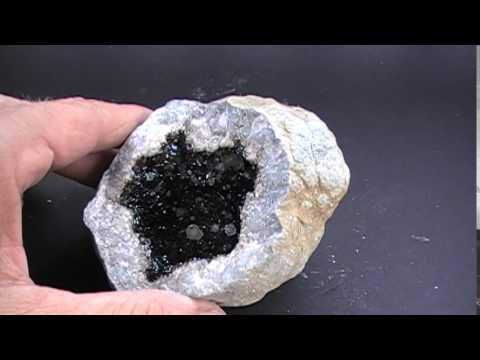
Like Arkonor, Bistot is another of the “rock ores” only found in nullsec, and then usually only in the roving anomalies I previously mentioned. While it can be found in asteroid belts, it’s not often it is. Unlike Arkonor or Mercoxit, Bistot in its raw form is thankfully not as toxic or radioactive. Given, that fact, as you can see, this is a chunk of Bistot.

As you can see, like Arkonor, it has a distinctly crystalline structure encased in the rock. This makes it a type of geode. Geodes are a hollow rock formed by chemical precipation and are formed in sediment rocks. Usually, they are hollow with the crystal within. In this case, it is the ore we call Bistot. I will cover geodes in another lecture but I have included links to the nature of geodes, if you are interested, for further reading.

Rarity

Unlike Arkonor, Bistot can be found in any area of nullsec space.  However, it still can only be found in nullsec and not in high sec or low sec, which makes harvesting it dangerous from CONCORD’s standpoint.  It shares the same characteristics as Arkonor, in that respect.

Risks Inherent in Harvesting Bistot

Exactly the same as Arkonor.

What is Bistot Used For?

Bistot yeilds Megacyte, Zydrine (mostly Zydrine), and Pyerite… all of which are used in building everything in our society.  This makes Bistot extremely valuable as a raw ore.  Zydrine itself is valuable and rare, and being used in ship building makes it absolutely necessary in order to maintain our current standard of life or to improve it.

Theories on the origin of Bistot

I think I will have to cover that in another lecture.  I touched on it a few days ago when I talked about Arkonor.

References:
http://eve.wikia.com/wiki/Bistot
https://wiki.eveuniversity.org/Asteroids_and_Ore
https://ore.cerlestes.de/ore

ABC Ores 1 – Arkonor

This is recording of Professor en Thielle’s lecture for a high school in the Federation Logistics Support Station – Mirilene that was broadcast by holo remotely. Ever since DED declared her still dead, and to be arrested on sight (curious that it’s not a kill on sight, but simply detain alive…), Professor en Thielles has carefully avoided high-sec, and even low-sec, as the risk of capture is too great.

How she managed to slip through their grasp in the move from Deklein to Etherium Reach is curious…

Edoualian Delassi, Research Assistant to Professor Gerret Nagachaux, Caille University – Bourynes

What is Arkonor

Arkonor is a toxic and radioactive ore found only in certain areas of null-sec known for it’s faintly red-orange sheen and crystalline shape when the ore pokes out of the slag rock comprising the asteroid.  It is, however, the best resource in all of New Eden for the mineral Megacyte, and yields a decent amount of Mexellon and Tritanium.  This also makes it one of the most useful types of ore to harvest.

As a regular rock ore, the skills needed to mine it are minimal.  A normal mining laser or strip miner on a basic ship that can fit these modules, and a decent sized ore hold, is all that’s needed.

Rarity

The real problem surrounding Arkonor is finding it.

Arkonor is only found in null-sec (security rating 0.0 and lower) and then only in certain parts of null-sec.  At the time of this lecture, it was found only in areas of space nominally claimed by only three of the major factions – Amarr, Gallente, and Minmatar.  It is not found in the Caldari part of null-sec for reasons we haven’t actually figured out yet.

The other issue is that it’s not always found in a regular asteroid belt but instead in the rare and difficult to find ‘mining anomalies’ that sometimes aren’t always present leading researchers to believe that arkonor is an ore found only from comets originating in systems we haven’t discovered yet and then only passing through certain systems (**comets are the prevailing scientific theory as to the origin of various mining anomalies).

What Are the Risks Inherent in Mining This Ore?

Compared to Mercoxit, the risk isn’t as high.  However, like Mercoxit, the area of space the ore is found in is not covered or supported CONCORD.  If a miner of Arkonor runs into trouble with piracy, there is absolutely zero help coming from CONCORD.  However, in most cases, miners are supported by a fleet of the so-called “sovereign alliances” and coalitions of capsuleers and New Eden citizens who were disenfranchised by the actions or policies of the four primary factions (Amarr, Gallente, Caldari, Minmatar) who moved out to these new factions – the alliances controlled by capsuleers – to carve out their own lives in these previously lawless spaces.  As such, a call for help will often result in a large and powerful fleet of ships ready to help a mining fleet in the case of piracy or other enemy factions.

Miners who are “claim jumping” will also find the same fleet breathing down their necks, so to speak, but claim jumpers know their risks and they don’t need to be stated here.

What is Arkonor Used For?

As I touched on before, Arkonor yields three minerals: Megacyte, Mexellon, and Tritanium.  All of these ores are used almost everywhere, particularly Tritanium.  These minerals can be used in anything from ship building, both basic and advanced ships, to components, stations, and even planetary bases, moon bases to regular household items such as forks and spoons.  While the ore itself is toxic, once processed these properties are also harvested from the slag and the minerals — and anything from those minerals — is then safe to use.

Theories on the Origin of Arkonor

I will have to touch on the possible origins of Arkonor, and other mining anomaly related ores, for another day as it is a topic by itself.

If there are any questions, I will begin taking them now… ah, yes, you in the left side of the room near the door…

**recording ends**

References:

http://eve.wikia.com/wiki/Arkonorhttp://games.chruker.dk/eve_online/item.php?type_id=22http://games.chruker.dk/eve_online/item.php?type_id=40https://wiki.eveuniversity.org/Asteroids_and_Ore

Never Thought I’d Call Null-Sec Home

The new profile picture of Meredith.
A picture of Meredith en Thielles as she is now, taken by Jarvis Cipher in approximately YC118 shortly before Lippstadt Creed (and SLYCE) left Deklein for Etherium Reach.

The subject that the directors of Lippstadt Creed call “Meredith en Thielles” appears to be a highly altered, or sophisticated clone of the lost professor. It is the opinion of the CONCORD that while she may appear to be the deceased Professor en Thielles this is mere wishful thinking. Make no mistake, while her presence is benign now, it may not be later. That construct is a Drifter – and only very mildly different in appearance. It is the opinion of DED that her licenses and identity be immediately revoked. If the clone of Professor en Thielles makes the mistake of entering CONCORD protected space, all ships are hereby ordered to immediately detain and transfer the construct to Yulai.

Anareri Acon – CONCORD Security Specialist, Yulai

It took me a few days to finally look at this. I never really thought I’d be able to make an entry here again. I haven’t had access to this system in so long that I guess I thought I would never have access again.

So much has happened.

But yet nothing has.

I don’t have clear memory of exactly what happened between popping back out of that wormhole and finding Jarvis again (of all coincidences… out of all of New Eden, the wormhole I pop back out of has him in that system…) but I know something did. I can’t even look in a mirror. I don’t look the same, I don’t feel the same. Time has passed. I can see it in my face and I can see in on the calendar. However, my perception of time and what my own body shows doesn’t line up. It’s not even close. For me, it feels like maybe ten… fifteen… maybe not even that. But for everyone else it’s been thirty-three years.

I still look fifty. My hair, now that it’s finally growing back, is white as it should be for someone my age–perhaps more–but my face and my body is the same. Perhaps… even younger.

The pictures Jarvis has sent CONCORD and Caille to prove my return, and for identification, all shows me as I was back when I disappeared, only with greying hair.

I don’t look like that anymore.

I don’t even wear the glasses anymore.

Enough of this maudlin whining.

Jarvis has me working as the station gunnery and control officer on one of the athanors in the star system the corporation he now works for owns. Thankfully, they’re in null-sec. As far away from CONCORD and Caille as I can possibly get. Probably a good thing. If I was seen, I’d be whisked away and probably poked and prodded like some science project instead of a human being. At least out here I’m protected.

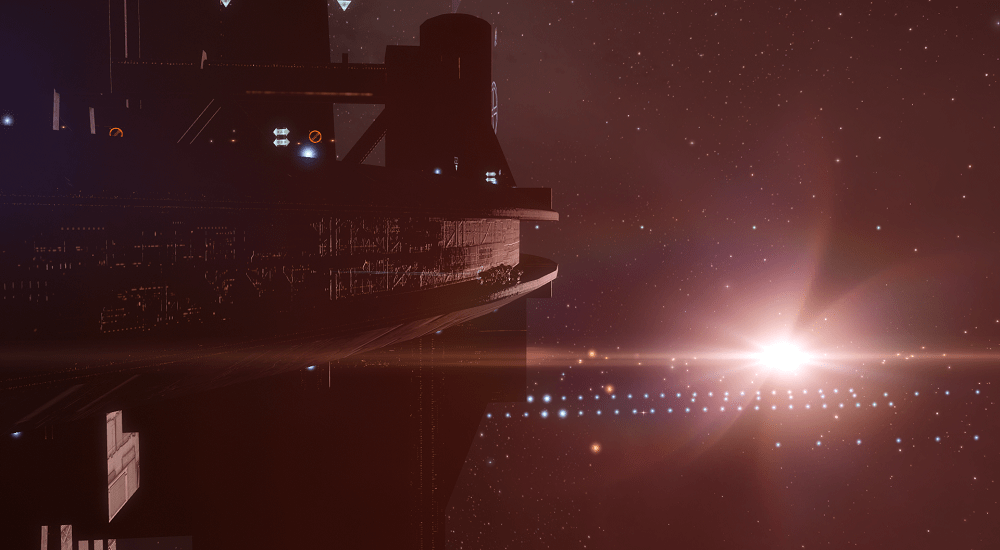
While on a maintenance trip to another athanor, I took this snapshot.

It’s in a system halfway to Venal… where the systems have no names. Only designations. Sometimes I miss Vittenyn and Bourynes, even Intaki, but it’s not that bad out here anymore.

I could make it home.

The Invictus

A Fan Series in Novel Form

Meredith en Thielles time as the Captain of the Invictus is a long and storied one. We’re not even sure how much of it is true, and how much of it hasn’t been told because of the classified nature of the missions and, indeed, even her employer at the time. Unfortunately, since her disappearance in YC86, she is unable to be reached to clarify.

This is the first, and only, log recovered from that time.

— Edoualian Delassi, Research Assistant to Professor Gerret Nagachaux, Caille University – Bourynes

Geminate/N-K4Q0/MR4-MY VII
March 31st, YC70
Invictus Captain’s Log

I never thought I would be doing these again. When you’re on a frigate or a corvette and all by yourself, your log only needs to be cursory at best. That actually makes them easy to fill out. Just say when the ship was maintained, where, and what needed to be done. How much it cost. Mission notes, if need be.

This is a bit different. I have a crew that I’m responsible for and someone out there may want some sort of accurate (or my take on events) report on things. I need to keep track of crew, human resources, cash flow (or, very rarely, the lack thereof and what we had to do to kickstart that).

I won’t get personal, well, not too much. My X-O tells me the point of this is for someone out there to disseminate my mental state if something goes right, or wrong, or just plain sideways so some personal journal keeping is fine.

My X-O.

Even that has a strange ring to it.  I’ve never been a captain before, especially not in something that technically shouldn’t even exist yet and definitely in something that was meant mostly for combat and not scientific missions.  It can do that. The scanning suite is above par.

My new ship is a Minmatar made, but obviously the tech on it is from somewhere else and I really, really don’t want to know where that was, strategic Loki-class cruiser named the Invictus. I don’t even want to think about the implications of history almost repeating itself here, but I’m not wandering aimlessly through the stars. I was given a mission by the Society of Conscious Thought (SoCT) and while the point of it is still unclear, my employers have definite requirements. The crew was hand selected by them, me included although I have no idea why me.

Especially not as the captain.

But you didn’t come here to read about my self doubts.

So, day one of being the captain of the Invictus and we were sent to investigate a murder on the Ice planet in MR4-MY, a system run by SoCT.  I’ve worked with SoCT before, but it’s been years. However, it is kind of sort of Jovian in origin (a Jove or two may have had a hand in founding it) so their memories are as long as hell. Since the work I did was successful and I had a reasonably good reputation, they contracted me again.  When I accepted, I had no idea that they would make me a captain of a ship, but anyway.  I’ve voiced that enough already.

Part of me knows perfectly well why.

It doesn’t make me like it.

Now, admittedly, investigating a murder is a bit out of my league. Sure, I’m able to research and investigate things–it’s part of what I do as a scientist–but my expertise lays in Astrogeology not murder investigations.

But, despite my misgivings, my ability to ‘read rocks’, as my X-O says, came in handy as the murder had something to do with my field and the Invictus was needed to pursue other clues and suspects in the way a Loki-class strat cruiser only can.

One part scanning them down, one part doing it under cloak, and the other part sneaking up on them and opening up with the guns and the drones before they knew what was happening and leaving nothing but a wreckage and a warp scrammed escape pod with a suspect inside in the emptiness of space. All we had to do was yank them inside the ship, and then throw them in the brig while we warped back to base.

Job done.

I thought things were over with that.

Apparently, all we did was pass the test run. There’s something far bigger than this random job that they need us for, and we just got the job.

On the Nature of Mercoxit and Morphite – An Introduction

Biographical assistant’s note:  This is only the introduction and summary of Professor en Thielles’ study projects while she was working on her Master’s degree.  The full project notes and eventual presentation on “The Nature of Mercoxit and Morphite – Uses, Risks, and Feasibility” can be found in the archives at Caille University in Bourynes.

January 25th, YC98
Bourynes Campus – Caille University

One of the most interesting asteroids to drill into is Mercoxit, which is the only type of rock that will yield the rare mineral, Morphite.  What makes it interesting (as well as rare) is the fact that it can only be found on the fringes of known space where pirates tend to lurk.  Although, recently, there have been independent pilots and disenfranchised independents from all walks of life who are expanding into the “lawless” frontiers of space.  I won’t get into that part of it here as my current lecture is about a particular rock and, by extension, the mineral.

Given how rare and how dangerous it is to harvest this particular asteroid type, you would think that it would drive the price of one unit of the ore up into the stratosphere.  It is expensive in comparison to other asteroid belt or anomaly “rock” cluster resources but not more expensive than the ice type.  The reason for this is that what it’s used for is equally rare and the demand for the ships and resources that use it aren’t very high.

While, yes, the miners who can mine this asteroid type do make a living from it, there are not many of them.

This keeps the economy for this type of rock stable.

Mercoxit requires specialized training.  Normal mining lasers and strip miners are absolutely useless as the density of the rock is simply too high for even the strip miner, no matter what tier or complexity, to penetrate.  It’s for this reason that mercoxit requires the specialized “deep core” lasers and strip miners which are notoriously slower to carve out chunks of rock, even regular types, but are the only type of mining harvester than can do the job.  While certain crystals can make the drilling go faster (to a point) the density of the mercoxit slows down the process greatly.  And, even after the miner has managed to carve a chunk (or “unit”, as the pilots refer to it) of the ore out of the asteroid, the density wreaks havoc in ore bays as it requires twice as much cargo space in an ore hold as arkonor or spodumain.

Most find the process tedious, even more tedious than the most patient of miners can even handle, and give up on mercoxit in favour of mining ice or the “ABC’s” of regular ore.

What risks are inherent in mining this type of ore?

Mercoxit mining has numerous and sizable risks, which an experience miner will be fully aware of and ready to mitigate.  Outside of the usual risks of mining in the lawless fringes of space where the pirates fly ships capable of destroying anything smaller than a procurer and regularly raid the belts and anomalies, there are also threats from hostile pilots of alliances unfriendly to the alliance they are in… or are defending their claim from claim jumpers..  Those are risks all miners in “null sec”, where the asteroid is found, are used to.

There is, however, another risk outside of that… one that comes from the rock itself.

Mercoxit is a volatile and reactive rock which does not take well to the forces, or the disturbance, by mining lasers and strip miners… even the specialized deep core versions.  This results in the occasional, and corrosive, cloud of dust and vapour being ejected from deep within the mercoxit asteroid and spilling out into the surrounding area of space.  If a mining ship is too close to this cloud, the cloud will cause instant and then ongoing damage to armour and ship systems until the ship is moved outside of the cloud or the cloud dissipates.  Most experienced miners of this ore have not only learned how to minimize these explosions and offgassing but also usually maintain a safe space between then and the asteroid, one where they are close enough to use their lasers or strip miners but not run afoul of the cloud.

What is it used for?

Mercoxit is the only ore that yields morphite, and it only yields that.  Unlike other ores, there is no other byproduct outside of regular, and hard, slag which is about as useful as slag from any other ore.  Miners after mercoxit know this and usually only care to compress the ore (removing enough of the slag to make transportation easier) in order to ship it to major trading hubs for quick sales.  For the dedicated, the ISK they get in return is more than enough compensation to match the risk.

Morphite, for those with sufficient skill to reprocess the ore without losing too much of the valuable mineral into the slag pile, also yields near instant profit.

Outside of the immediate return in ISK, morphite is used in the building of the “Tier 2” advanced ship fittings (**except ‘rigs’) and not for anything else.  Its primary purpose is to simply make normal components better components.

References:
Morphite – EVE Wiki
http://eve.wikia.com/wiki/Morphite

Design a site like this with WordPress.com
Get started